AI Multiply
Social Action for Health specialises in making academic and health research inclusive for our diverse community. We drew deeply on this expertise throughout our five-year involvement with the AI-MULTIPLY research collaboration.
AI-MULTIPLY’s mission was to use the collective expertise of patients, clinicians, researchers, and artificial intelligence (AI) to improve care for people living with multiple health conditions and medicines. Living with Multiple Long-Term Conditions (MLTCs) and taking many medicines (polypharmacy) is common and linked to poorer health outcomes, reduced quality of life, and higher healthcare costs. Yet how these conditions and medicines interact remains poorly understood. This research used AI to uncover these relationships with the aim to support better prevention, treatment, and decision making - aligned with the NHS’s vision for future care.
We used creative approaches to build community capacity to contribute to the research over a sustained period of time, constantly learning alongside the whole project team. We ensured that the lived experience and recommendations of communities most affected by MLTCs were a central and defining feature of AI-MULTIPLY.
“I have really enjoyed myself. Especially, because we had one translator for our table of four ladies. She translated to us in a way we understood and beyond. I couldn’t do this session at all without her support.” - Art workshop participant
Our approach
From the outset, we were aware that meaningful engagement of people from our local communities into AI-MULTIPLY would require time, consideration, and imagination. After initial recruitment, we held our first Patient and Public Involvement and Engagement (PPIE) meeting. Although we were working with our trusted community facilitators and translators, we soon realised that the typical slide presentation and Q&A approach would not work for our group at this stage. People needed much more time to meet each other, share experiences of living with MLTCs, and only then would they be in a position to understand the research, grow in confidence, and reach a place where they could contribute, pose questions, and really feel part of the project.
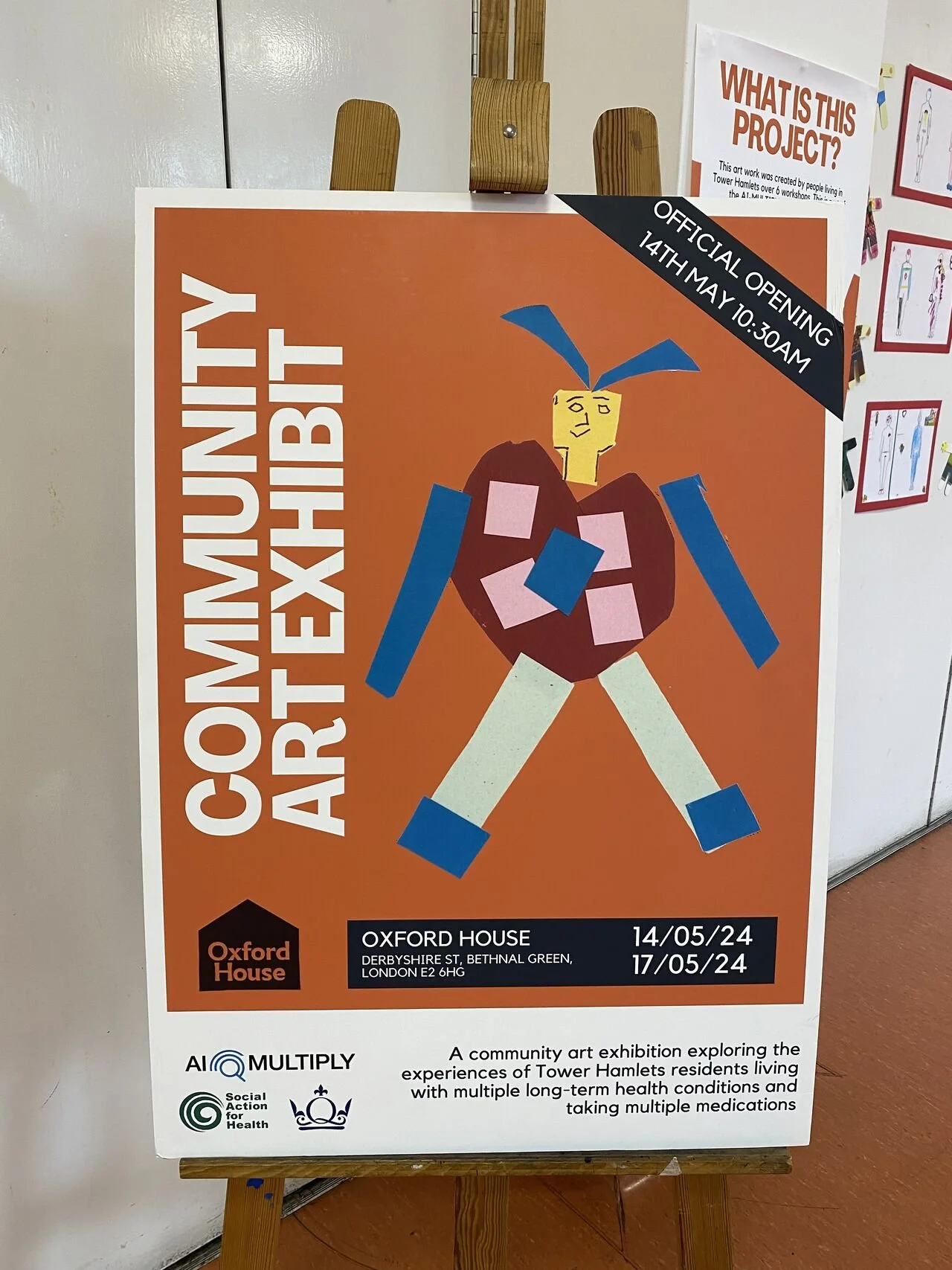
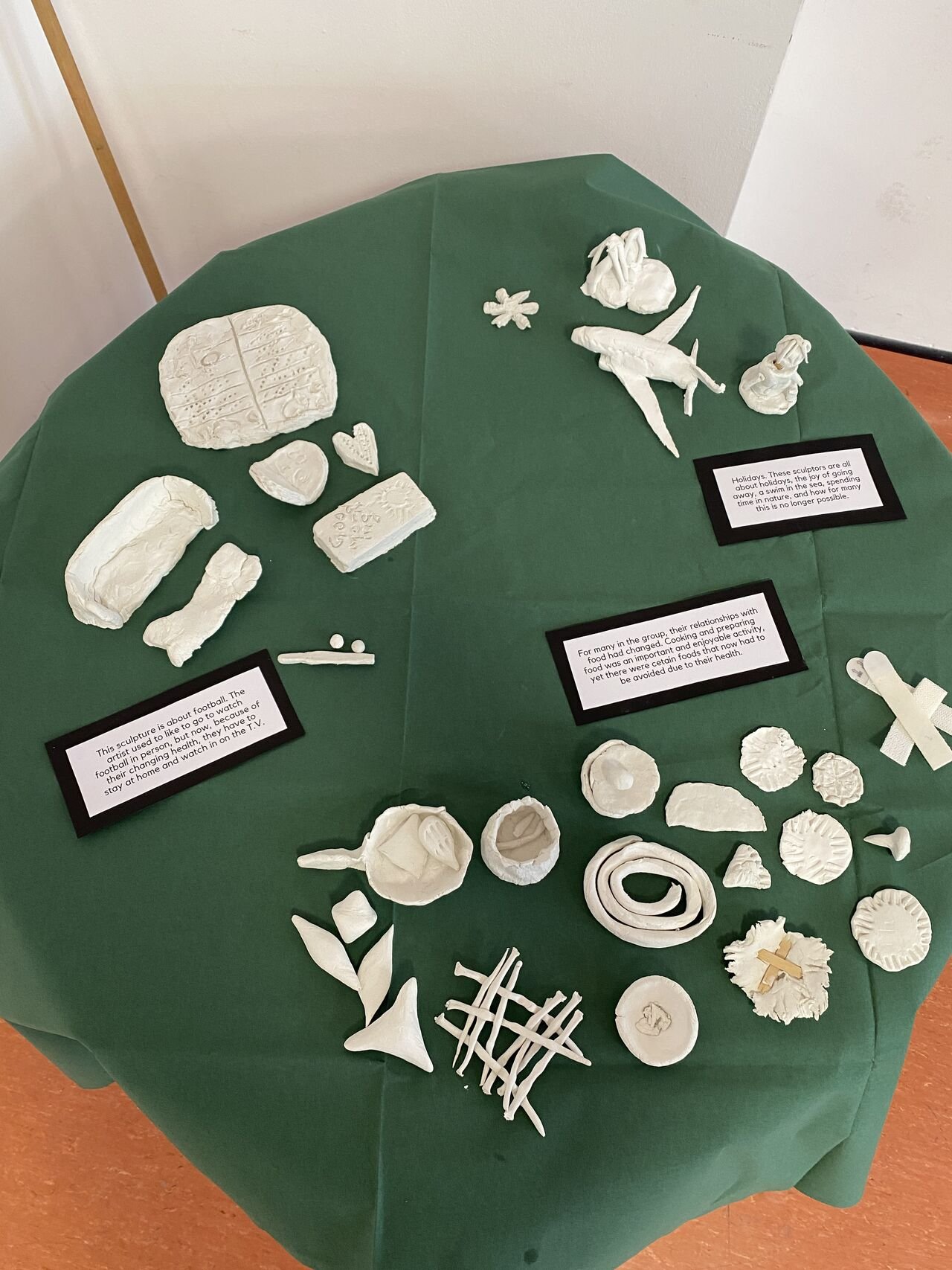
This is when we started thinking about creative methodologies as an equitable, democratic, and accessible way for diverse people to join in and have a voice. We were able to gain additional funding and develop our art workshop approach. Working with an experienced artist and health facilitator, we ran a series of six workshops. Each week we used different materials and explored different topics which the group and team recognised as relevant to the research.
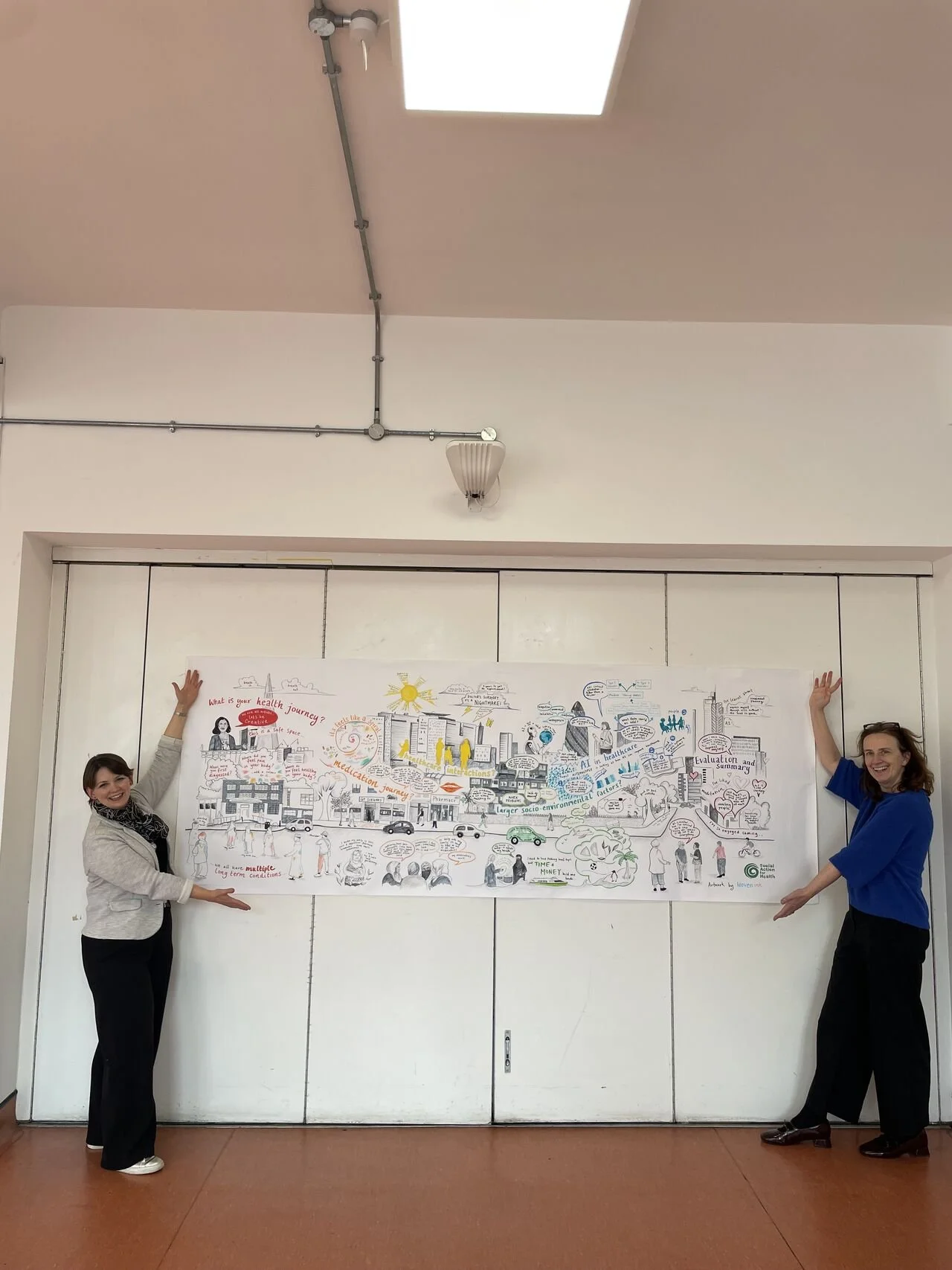
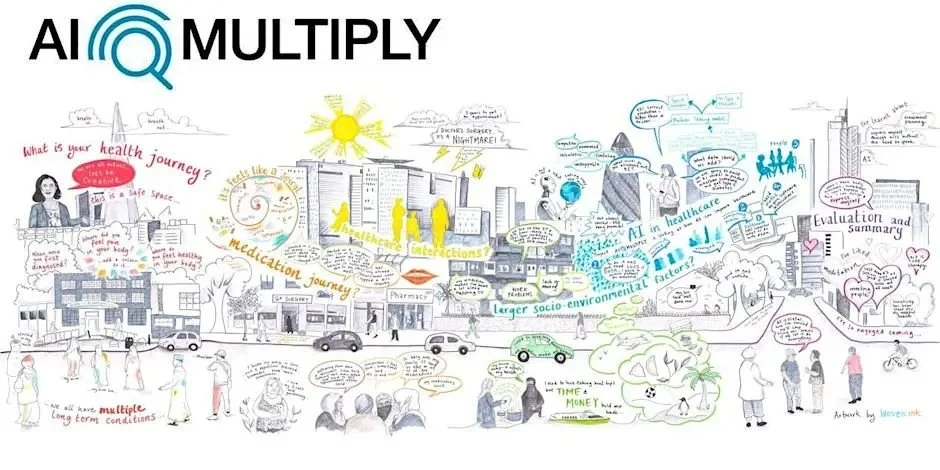
We found that arts-based approaches can make research playful, and creating visual images helped centre lived experiential knowledge. We also used visual minutes to capture the discussions and contributions from participants at the art workshops.
As members grew in confidence and understanding about the project and their role within it, a group of researchers approached us with a request for a small group to work with them to co-design an accessible film about Large Language Models (LLM’s).
Building community capacity
Meaningful involvement throughout the research lifecycle has delivered benefits beyond the project itself. For example, 82% of Social Action for Health PPIE contributors were new to research, 73% do not speak day-to-day functional English, and 86% are from minoritised ethnic backgrounds.
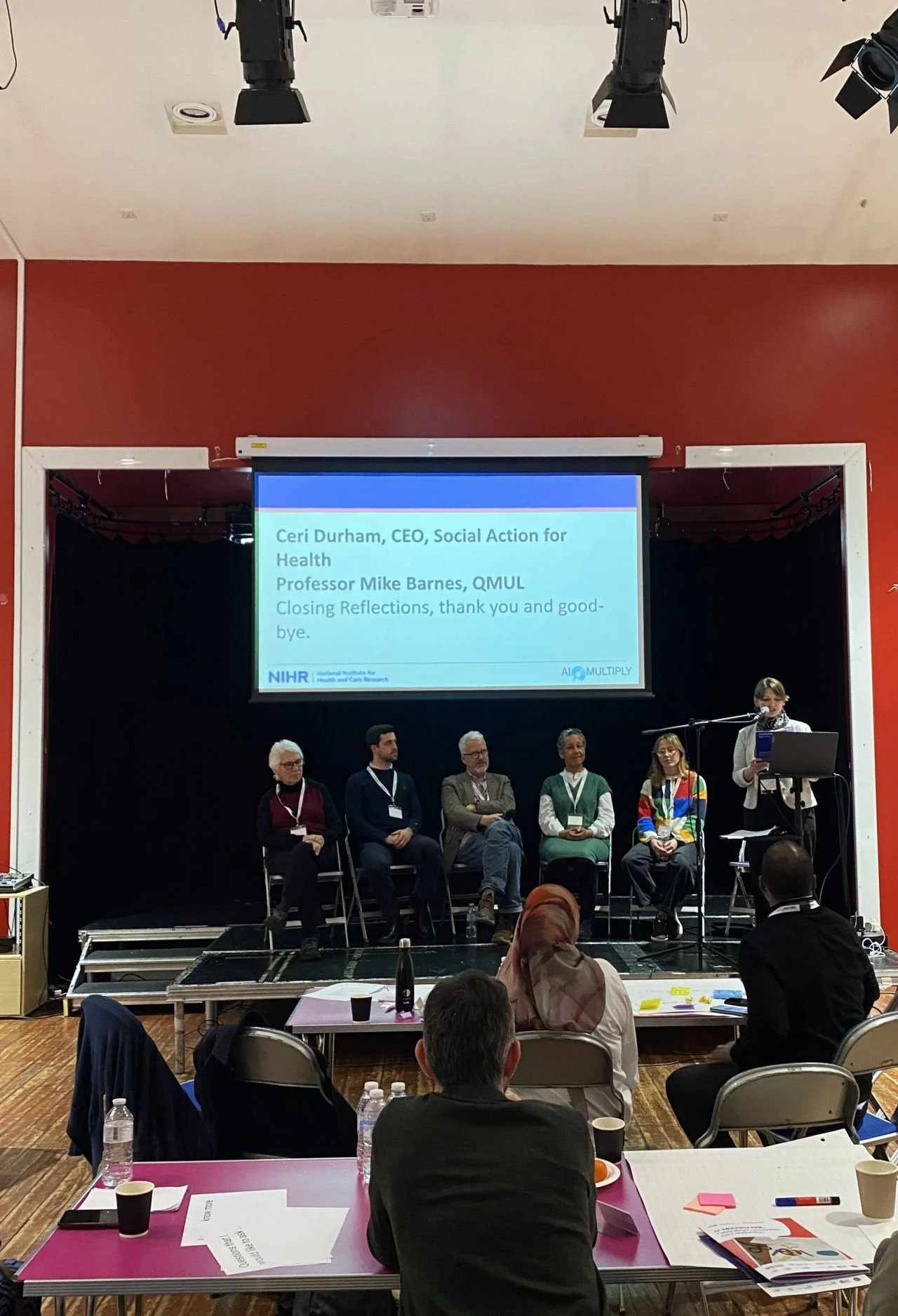
By the final year of the project, members of our group travelled with us and researchers to conferences in Birmingham and Glasgow. What started out in art workshops had led to this. We even won the People’s Recognition Award for the LLM film work.
“What I didn’t expect was the new confidence I got. I’ve been to Birmingham, Glasgow, Queen Mary conferences, academic places I never thought I would be in. I didn’t stand up and speak at first, I was shy but I still went. And later I put my hand up in a big lecture theatre. I wouldn’t have done that before. I don’t have any qualifications at all, but I’ve learned I can still understand and join in.” - Lisa McFie, PPIE Contributor
Reflections and learning
It wasn’t always plain sailing - especially working with a large team on a complicated topic like AI. We hope these reflections and learnings can be useful for others in future projects:
Not everyone is used to talking about and recognising health inequity. We all have to be vigilant at recognising disproportionate impacts and be better at explaining the lived reality of what that means.
Relationship building is key. Plan (and budget for) in-person meetings with time to get to know everyone at a human level.
Recognise that everyone might be involved for different reasons. Find your common goal to enable you to think about the longer-term.
Meaningfully involving people with lived-experience requires recognition and accommodation of that experience; eg translation, travel adjustments, overnight stays.
Build in time for PPIE members to share lived experiences with each other, and have support in place.
Choose your battles! Be kind, respectful, and keep listening to each other.
Impacts and outputs
AI-MULTIPLY has already led to a wide range of impactful research that has been presented at conferences and published in academic journals. Some highlights include:
Developing an inequalities scorecard for AI - AI has great potential to improve healthcare, but when it is trained on data that reflects only a narrow segment of society, it risks reinforcing existing health inequalities. As part of our role to ensure there was a focus on health inequalities throughout AI-MULTIPLY, the PPIE groups have worked with the team from Queen Mary University London (QMUL) to start the development of an Intersectional Inequalities Scorecard for use during the development of new AI tools.
Building a Polypharmacy Workbench – a team at QMUL has developed an interactive Polypharmacy Workbench using GP prescribing data. The tool helps clinicians and researchers explore how repeat prescribing and polypharmacy relate to MLTCs and adverse health outcomes. The tool focuses on inequalities - users can examine outcomes across groups defined by sex, ethnicity, and deprivation, helping to identify populations that may be more vulnerable due to specific combinations of conditions and medicines.
Social Science Investigation of Interdisciplinary AI-in-Healthcare Work – this QMUL project is a social science-led ethnographic study examining how interdisciplinary teams work together to design AI for healthcare. Using observations, interviews with researchers and public contributors, and reflexive workshops, the team examined AI development as a socio-technical process shaped by both technical and social factors.
For more information or to explore how we might be able to support your research in this area please email info@safh.org.uk.